
How can I be a better friend? I've got some ideas!
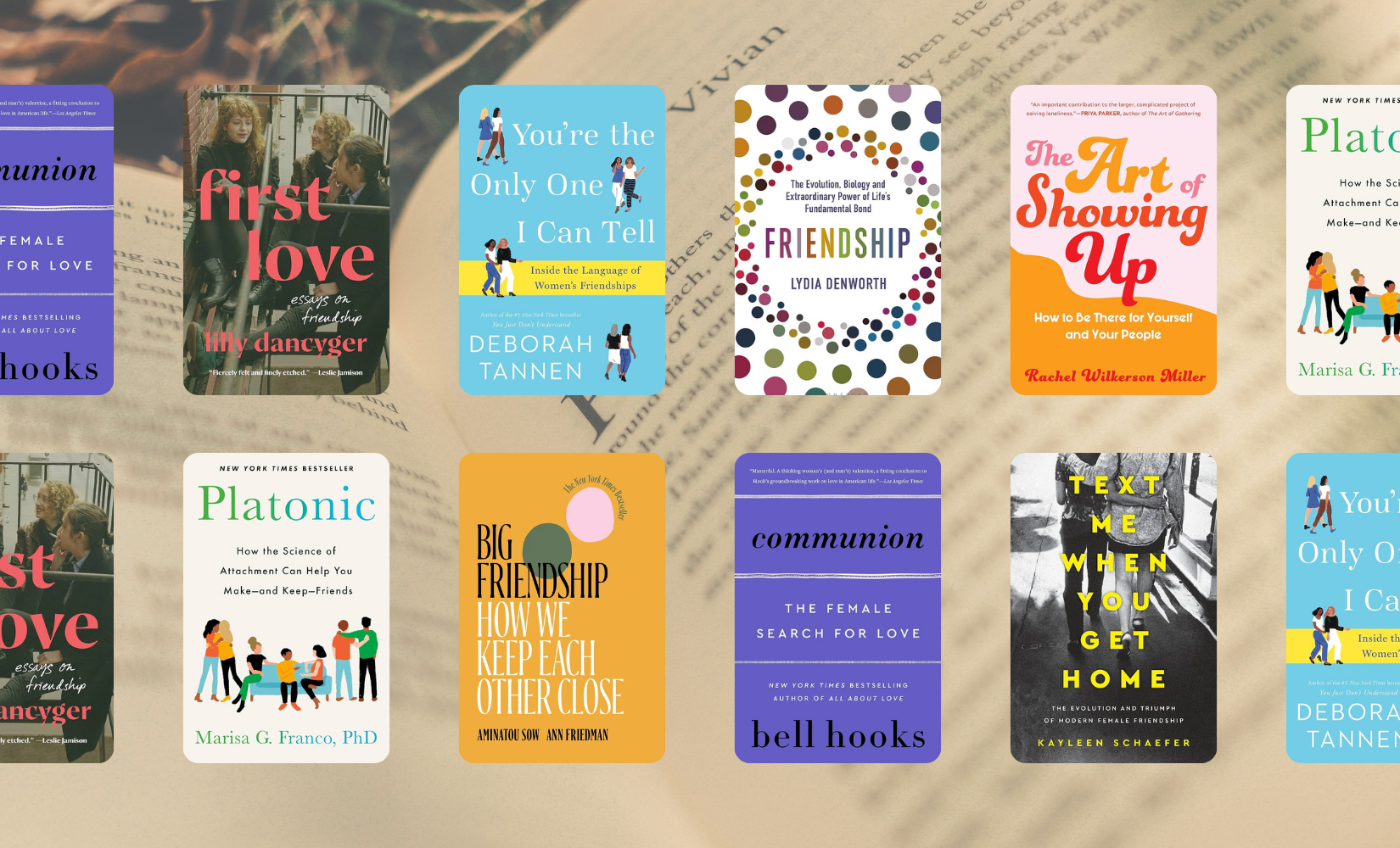
These eight books might give you exactly the kind of information you need.
If you don’t follow me on Instagram, you may not know this, but I’m a huge reader. Mostly, I read novels (if you’re ever looking for a feminist thriller, I’ve got you), but I do pepper in self-help and social issues books, too.
And over the years, I’ve read a lot of books on friendship.
It’s a topic that’s fascinating to me. Especially for women, and arguably other marginalized communities, friendships are essential to safety and growth (see: Friendship by Lydia Denworth), and yet we become wildly bogged down with the ideal of (cisheteropatriarchal) romantic love as our end goal (see: Communion by bell hooks).
So much attention is taken away from friendships as we grow into adulthood. And yet, one of the most common questions I receive about interpersonal connections is: “How do we make and maintain powerful friendships in adulthood?”
If you’ve ever asked yourself that question, you’re in the right place.
For one thing, you are always welcomed (nay—encouraged!) to reach out to me for support around issues in frienships.
For another—well—that’s exactly what this resource is for.
Here are some of the best books I’ve read on friendship – to help you make friends and to help you keep them.
The Art of Showing Up: How to Be There for Yourself and Your People
By Rachel Wilkerson Miller
Publishing Blurb: A practical guide to nurturing meaningful relationships by first understanding self-care and then learning to authentically connect with and support others in today’s complex social landscape.
Why I Love It: I adore this amazing book. If you don’t read anything else on this list, I highly, highly recommend you pick up The Art of Showing Up. What makes it so great is that it’s actually a workbook. It offers prompts to help you better understand, first, what you need as an individual to feel like your cup is full, and then, the skills you need to show up as a good friend to the people around you. Do you need help naming boundaries? expressing hard feelings in conflict? breaking up with a friend? It’s all in here. This is a great read whether you’re not sure where to start with friendships or you want a little refresher on how to show up as your best self.
Friendship: The Evolution, Biology, and Extraordinary Power of Life’s Fundamental Bond
By Lydia Denworth
Publishing Blurb: Explores the biological, psychological, and evolutionary foundations of friendship, revealing its essential role in human and animal well-being across lifetimes.
Why I Love It: This one is for the science nerds! If you’re interested in why we have friends – the biological, psychological, and sociocultural imperatives to have these connections, from an evolutionary standpoint – this book is for you. It’s a great explanation of why, despite the social push toward family and romantic partnership as our most important relationships, friendships stand the test of time. While this book isn’t a difficult read filled with academic jargon, it is a research-based, scholarly understanding of friendship. (with a lot more research about primates than you may be bargaining for). If the idea of anything academic gives you the ick, I’d skip this one.
First Love: Essays on Friendship
By Lilly Dancyger
Publishing Blurb: A poignant exploration of the profound bonds between women, celebrating female friendships as life’s great loves.
Why I Love It: If you’re more interested in creative writing and memoir, First Love may be more up your alley. This collection of essays looks at the important friendships in the author’s life and how she’s come to understand herself better through those relationships. Each essay stands alone. But as you move through the book, you come to see how these stories are connected, too, making for a very satisfying read. And if coming-of-age, girlhood friendship stories are what you live for, stay tuned! Another reading list of my favorite friendship-themed novels and memoirs is coming.
You’re the Only One I Can Tell: Inside the Language of Women’s Friendships
By Deborah Tannen
Publishing Blurb: A comprehensive analysis of how women communicate in friendships, exploring patterns of empathy, competition, and social media’s impact on female relationships.
Why I Love It: Did you take a 100-level elective in linguistics and college and find yourself still thinking about it to this day? Do you sometimes wish you had studied sociolinguistics because you find the relationship between culture and language fascinating? No? Just me? Well, if that sounds like it could be you, then you want to read You’re the Only One I Can Tell. This book looks at language through a gendered lens, making sense of what makes female friendships so unique. From common phrases (“I totally understand what you mean”) to intonation (texting “hiii” instead of “hi”), take a look at how our language with one another both creates and reflects our relationships.
Text Me When You Get Home: The Evolution and Triumph of Modern Female Friendship
By Kayleen Schaeffer
Publishing Blurb: A celebration of the evolution and power of female friendships in modern society, exploring their portrayal in pop culture and personal experiences.
Why I Love It: This book is part memoir, with the author sharing about her own female friendships over the course of her life, and part journalism, both about the science of female friendship and telling stories about other people’s experiences. If you’re interested in the science of friendship, but want something a bit more grounded, I recommend checking out Text Me When You Get Home. Her overarching thesis is that there is an intimacy that women can only receive from one another, and that creates an intensity that can lead to fulfillment, but also heartache. Sound familiar? Pick this one up.
Communion: The Female Search for Love
By bell hooks
Publishing Blurb: An exploration of how feminism, women’s workforce participation, and self-help culture have transformed ideas about love, offering guidance for women to embrace love in all life aspects.
Why I Love It: I love bell hooks’ writing on love. If you haven’t yet read All About Love, I would start there for a more comprehensive look at feminist theory and the desire for romantic love. But Communion is a lovely followup, alongside The Will to Change, which focuses on men. While this book is focused on romantic love, it comes from a very specific foundation: the fact that research shows (scroll back up to Friendship) that women do not get their emotional needs met in romantic relationships, but rather, in their platonic connections with other women. Communion looks at why we’ve forsaken this fact in pursuit of romance, and how to find our way back.
Platonic: How the Science of Attachment Can Help You Make—And Keep—Friends
By Dr. Marisa G. Franco
Publishing Blurb: A guide to understanding attachment styles and using scientific insights to build meaningful, lasting friendships in today’s fragmented world.
Why I Love It: If you find attachment theory useful for understanding your romantic relationships, you’ll love Platonic for how it uses those same ideas to help us understanding our friendships. What I love most about Platonic is that it offers a practical way forward for folks with different attachment styles. For example, how could your anxious attachment show up as lacking the motivation to initiate plans with people for fear of rejection? How might your avoidant attachment show up in conflict with friends, making it difficult to move through the hard stuff? Platonic is a great read for anyone looking to understand how they could show up more secure in their friendships.
Big Friendship: How We Keep Each Other Close
By Aminatou Sow and Ann Friedman
Publishing Blurb: A compelling exploration of deep friendship as life’s most influential relationship, following two podcast hosts’ decade-long bond through triumphs, challenges, and geographical distances.
Why I Love It: Long-term friendships are unique, both in their charms and their challenges. Many of us have had the experience of friendships simply falling away, drifting apart from people who we once thought were akin to life partnerships. In Big Friendship, Sow and Friedman share the experience of their long-term friendship: how they met, why they love each other, how they move through ruptures, and why it feels important for them to stay in one another’s lives. While not a how-to self-help book, it is a lovely portrait of how to move through all that life throws at you and your bestie.
Honorable Mentions
These are books that I simply can’t, in good faith, include in the list above, only because I haven’t read them yet. They’re on my to-be-read list, and I’m very excited about them. If you get to them before I do, please let me know how they are.
How We Show Up: Reclaiming Family, Friendship, and Community by Mia Birdsong
The Other Significant Others: Reimagining Life with Friendship at the Center by Rhaina Cohen
Kin: The Future of Family by Sophie Lucido Johnson
Modern Friendship: How to Nurture Our Most Valued Connections by Anna Goldfarb
Fighting for Our Friendships: The Science and Art of Conflict and Connection in Women’s Relationships by Danielle Bayard Jackson